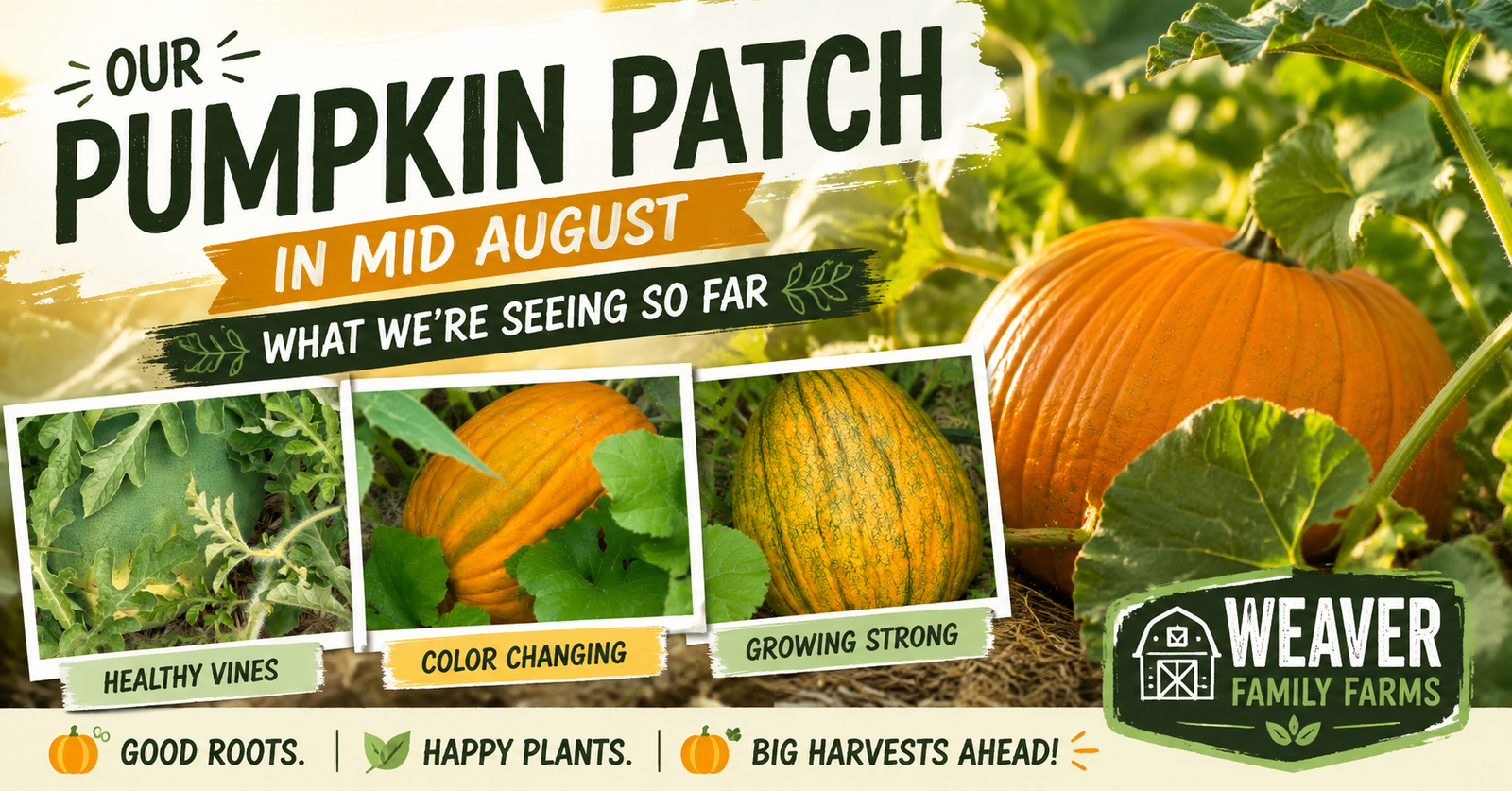
If you’ve been following along with our pumpkin-growing journey here at Weaver Family Farms, you’ll probably remember when this entire area was nothing more than freshly spread mulch, fence posts, and a whole lot of hope.
Now it’s mid August.
Instead of looking at bare ground wondering if the seeds were going to sprout, we’re walking through rows of sprawling pumpkin vines with pumpkins hanging everywhere.
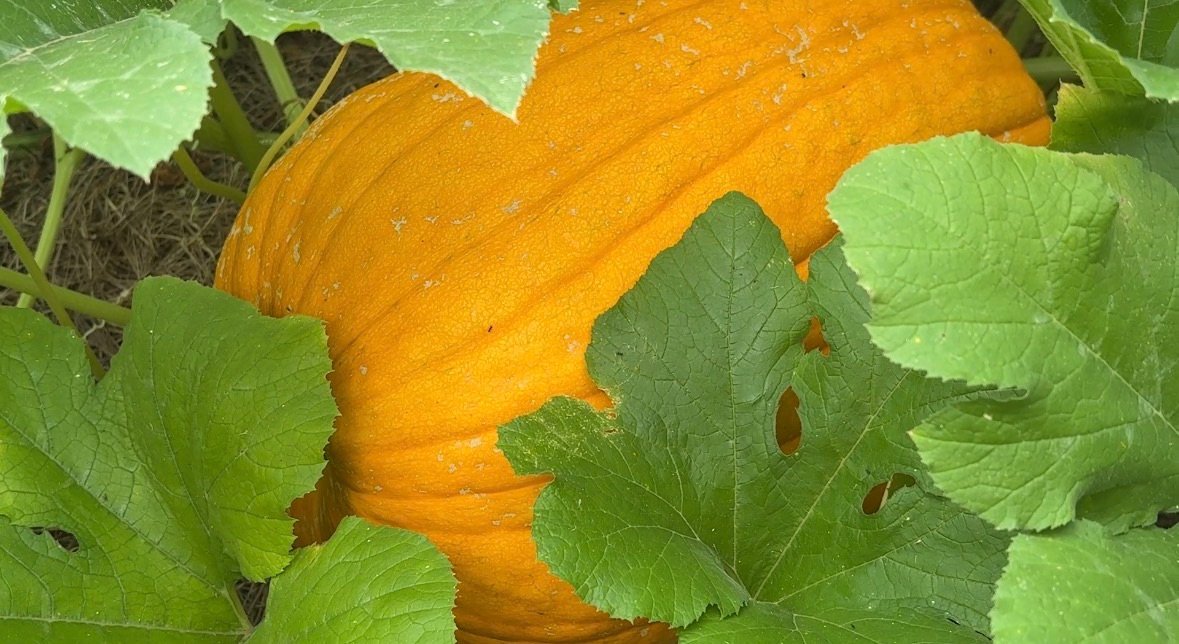
Some are still deep green.
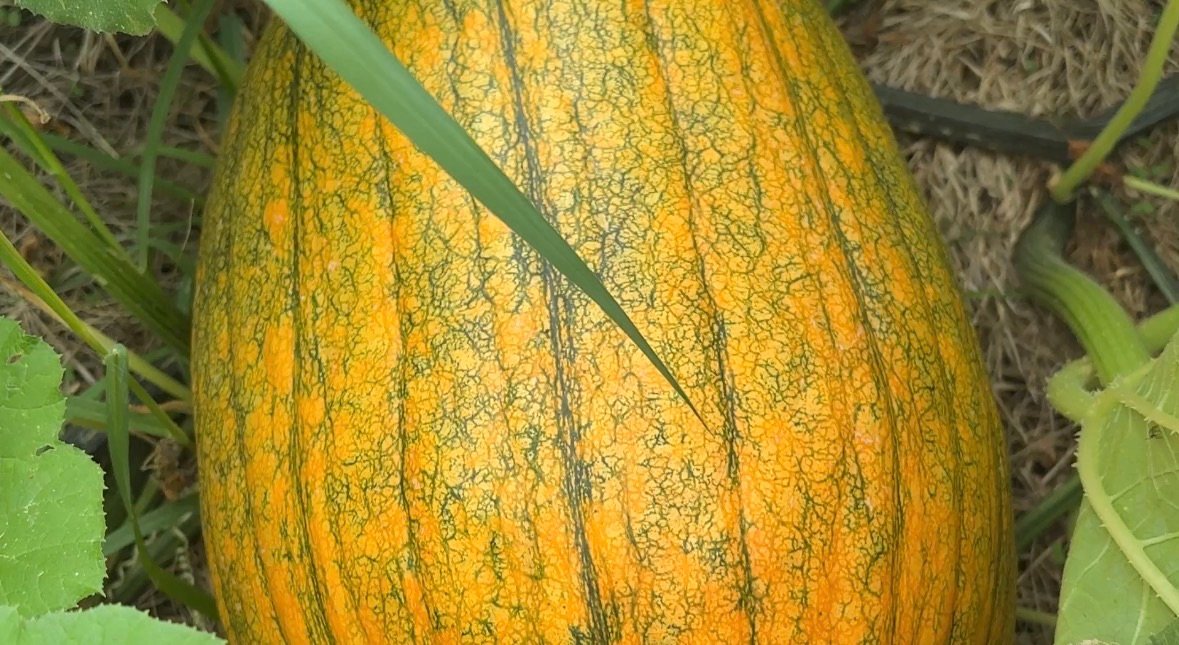
Some are just beginning to change color.
Others are already looking like they’ll be ready well before fall decorating season.
Watching everything come together has honestly been one of my favorite parts of gardening this year.
Growing pumpkins isn’t something that happens overnight. It’s months of planning, preparing the ground, planting seeds, watering through the hottest part of summer, hoping storms don’t destroy everything, and checking the vines almost every day.
Standing out here now makes all of that work feel worthwhile.
If you’re watching the embedded YouTube video in this article, you’ll get a much better look at what our pumpkin patch actually looks like right now and the different varieties we’re growing.
It’s Amazing Looking Back at Where We Started
Walking through the patch today almost doesn’t feel like the same place.
Earlier this year this area was completely transformed before we ever planted the first seed.
We hauled in multiple dump truck loads of mulch, spent days getting everything spread out, and built fencing around the entire area to help keep unwanted visitors out.
At the time it looked like a lot of work for an empty field.
Now it’s hard to imagine it looking any other way.
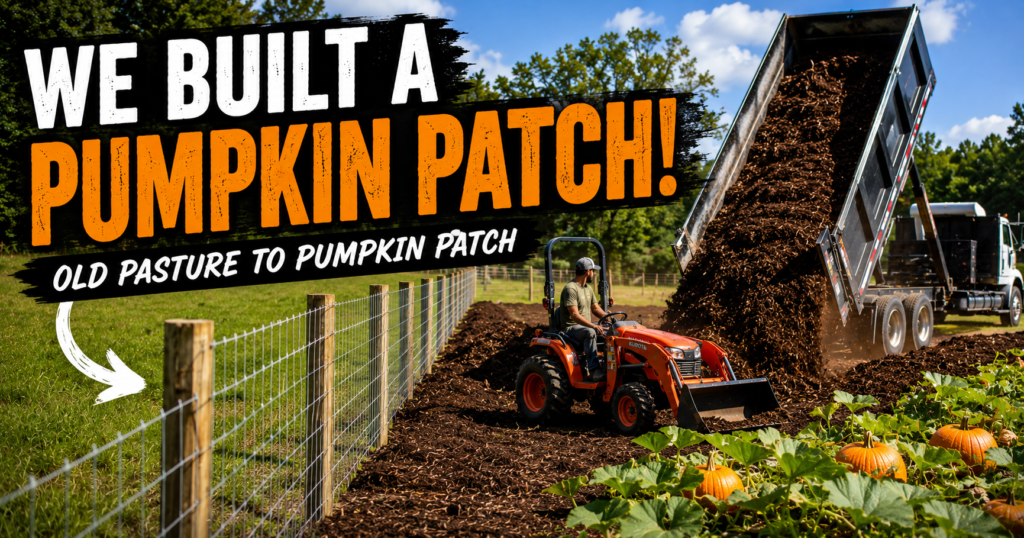
If you missed that part of the project, you can see how everything came together in Building Our Pumpkin Patch From Scratch With Mulch and Fencing.
Looking back at those pictures now really shows just how much can change in a single growing season.

Planting Those First Seeds Was the Easy Part
Once the fencing was finished and the mulch was spread, it was finally time to plant.
Like every gardener, I had all kinds of questions running through my mind.
Would the seeds germinate well?
Would insects become a problem?
Would we get enough rain?
Would the vines actually take off the way I hoped?
Thankfully, they did.
We planted using compost hills, which has worked really well for us by giving each plant nutrient-rich soil right where it needs it most.
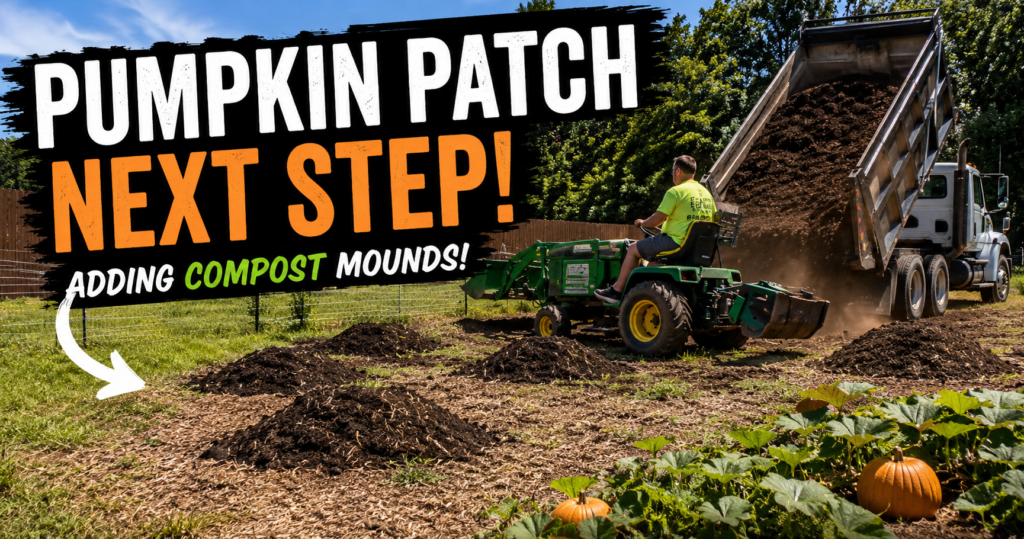
If you’re curious how we planted everything, I covered the entire process in Planting Our First Pumpkin Seeds Using the Compost Hill Method.
Now those tiny seedlings have turned into vines stretching across large sections of the patch.

The Vines Grew Faster Than I Expected
Every year I forget just how quickly pumpkin vines can spread.
One week they seem manageable.
The next week they’re reaching several feet farther than they were before.
Some vines have crossed into areas I never expected them to reach.
Others have intertwined with neighboring plants until it’s hard to tell where one variety ends and another begins.
That’s one of my favorite parts about growing pumpkins.
Every trip out to the garden reveals something new.
Sometimes it’s another blossom opening.
Sometimes it’s a new pumpkin hiding underneath the leaves.
Sometimes it’s realizing a vine has grown another several feet since yesterday.
Bees Have Been Some of the Hardest Workers in the Patch
One thing that really stands out while walking through the pumpkin patch is just how many bees are visiting the flowers.
Every morning there seems to be activity everywhere.
Without them, there wouldn’t be pumpkins.
Watching pollinators move from flower to flower has been a good reminder that healthy gardens depend on a lot more than just watering and fertilizer.
Nature handles a pretty important part of the job.


We’re Growing More Than Just Orange Pumpkins
One thing I wanted this year was variety.
Of course we’re growing traditional jack-o’-lantern pumpkins.
Those are classics for carving every fall.
But I also wanted pumpkins that looked different.
Some of the white pumpkins are starting to look really nice.
We’ve also got several warty varieties growing throughout the patch that have quickly become some of my favorites.
They’re definitely not what most people picture when they think about pumpkins, but that’s exactly why I like them.
Every year I find myself wanting to grow a few different varieties just to see how they perform.
Some mature earlier.
Some grow larger.
Some produce unique colors and textures that make decorating even more interesting.
Walking through the patch feels almost like a treasure hunt now because you never know what you’ll find tucked underneath the leaves.
Some Pumpkins Are Already Beginning to Ripen
This is probably the stage I’ve been looking forward to the most.
Seeing green pumpkins finally begin changing color makes everything feel real.
Not every pumpkin matures at the same speed.
Some varieties naturally color earlier than others.
Others stay green much longer before finally starting to change.
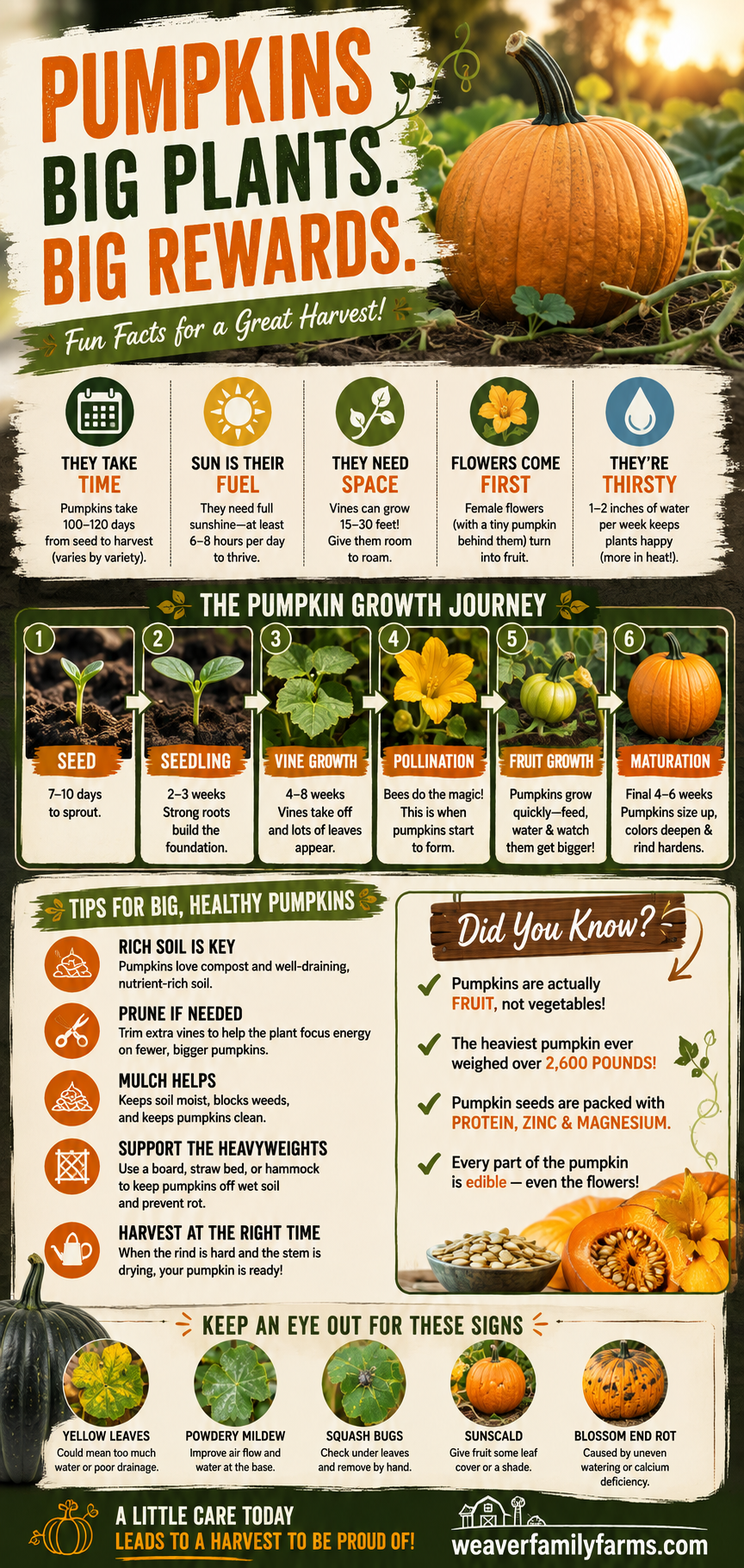
Under favorable growing conditions, pumpkins often begin showing their mature color about four weeks after fruit set, although exact timing varies by variety and weather.
Right now our patch has pumpkins in almost every stage imaginable.
Tiny pumpkins that just recently formed.
Large green pumpkins still growing.
White pumpkins beginning to mature.
Orange pumpkins that are already catching your eye from across the patch.
It’s honestly one of the prettiest times of the entire growing season.
Mulch Has Been Worth Every Bit of Effort
Looking back, hauling all those loads of mulch was one of the best decisions we made.
It has helped suppress weeds.
It holds moisture much better than bare soil.
Walking through the patch after a rain is cleaner too.
Instead of sinking into mud every time I check the vines, I can usually walk around much more comfortably.
The pumpkins themselves also stay cleaner when they’re resting on mulch instead of damp soil.
If you’re thinking about starting your own pumpkin patch, I wouldn’t skip the mulch.
It’s a lot of work up front, but it’s paid off all season long.
Watering Has Been One of the Biggest Jobs
August in Missouri can be brutal.
Between the heat and long stretches without meaningful rain, keeping pumpkins watered has easily been one of the biggest chores.
The vines use a surprising amount of water once they really start growing.
While watering everything this summer, I’ve also been fighting another common farm problem: algae in our livestock water tanks.

I recently decided to test whether copper tubing actually helps slow algae growth, and the results were pretty interesting. If you’re dealing with green water during hot weather like we are, you might enjoy reading about my five-day copper test for livestock water.
Thankfully, the pumpkins have continued growing despite the heat.

There’s Still Plenty of Growing Season Left
Even though we’re finally seeing pumpkins begin to ripen, the season is far from over.
There are still new blossoms opening.
There are still young pumpkins forming.
There are vines continuing to spread.
That’s one thing I really enjoy about growing pumpkins.
The garden is constantly changing.
Every week looks a little different than the week before.
I’m excited to see how everything looks by the middle of September when even more pumpkins should be reaching full size and color.
For pumpkins that set fruit during August, many will continue coloring through September and be ready in time for fall harvests if the vines stay healthy.
A Few Things I’ve Learned So Far
Every growing season teaches me something.
This year has been no different.
Starting with good soil made a tremendous difference.
The mulch was worth the effort.
Building the fence early gave me peace of mind.
Planting several different varieties has made walking through the patch much more enjoyable because there’s always something different to discover.
Most importantly, gardening reminds me that patience really is part of the process.
You can’t rush pumpkins.
Nature works on its own schedule.
Sometimes all you can do is keep watering, keep pulling weeds, and trust that the work you’re putting in today will pay off later.
Frequently Asked Questions
Why are my pumpkins still green in August?
That’s completely normal for many varieties. Pumpkins develop at different rates depending on the variety, weather, and when the fruit was set. Many won’t begin turning their mature color until late August or September.
Can pumpkins keep growing during September?
Absolutely. Healthy vines often continue supporting fruit through September, and many pumpkins don’t reach full maturity until just before fall harvest season.
How many pumpkins does one vine produce?
It depends on the variety and growing conditions. Some plants produce only a few large pumpkins, while others produce numerous smaller pumpkins throughout the season.
Should I move pumpkins while they’re growing?
I generally leave them alone unless they’re sitting somewhere that could encourage rot or they’re growing into an area where they’ll become damaged.
About the Author
Daxon Weaver is the owner of Weaver Family Farms, a small first-generation family farm on 4 acres in rural Missouri. Along with his family, he grows pumpkins, fruits, vegetables, and nursery trees, raises livestock, and enjoys sharing real-world gardening and homesteading projects from the farm. Every article is based on firsthand experience with the goal of helping other families grow more, learn more, and enjoy the journey just as much as the harvest.