
Can a Small Mini Excavator Handle Heavy Clay? We Found Out.
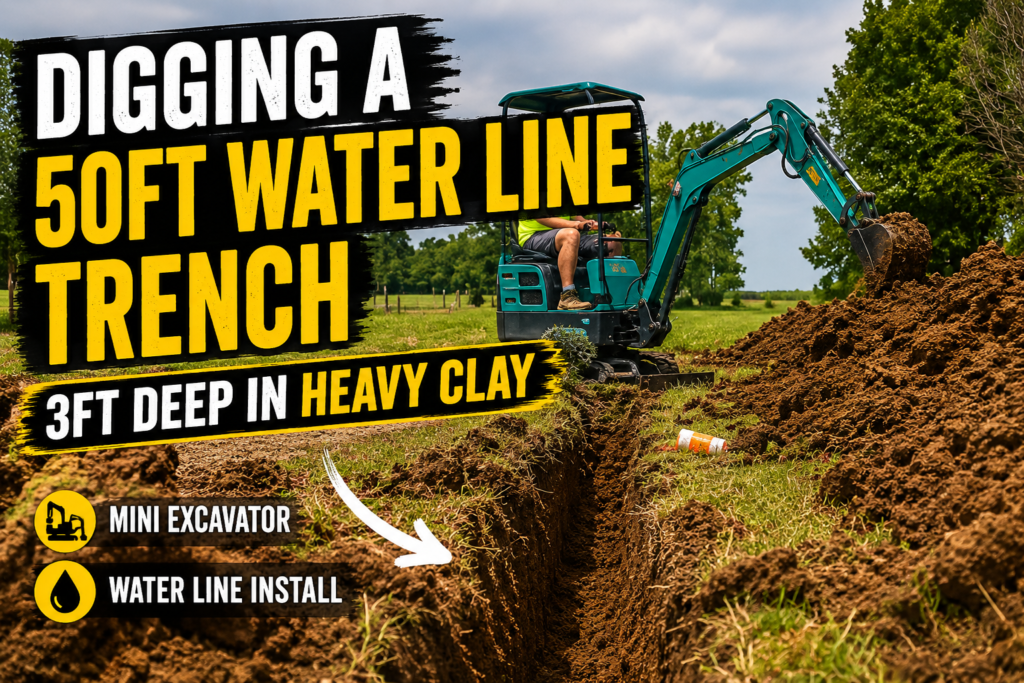
We needed to run a new water line out to a yard hydrant — 50 feet of trench, 3 feet deep, through some of the heaviest clay Missouri has to offer. The question was whether our little AGT QH12R mini excavator was up to the task or whether we were going to be in for a long day of fighting the machine as much as the ground.
Short answer: it handled it. This post breaks down how the whole job went, what we ran into, and what you should know if you’re thinking about tackling a similar project on your own property.
Why We Needed a New Yard Hydrant
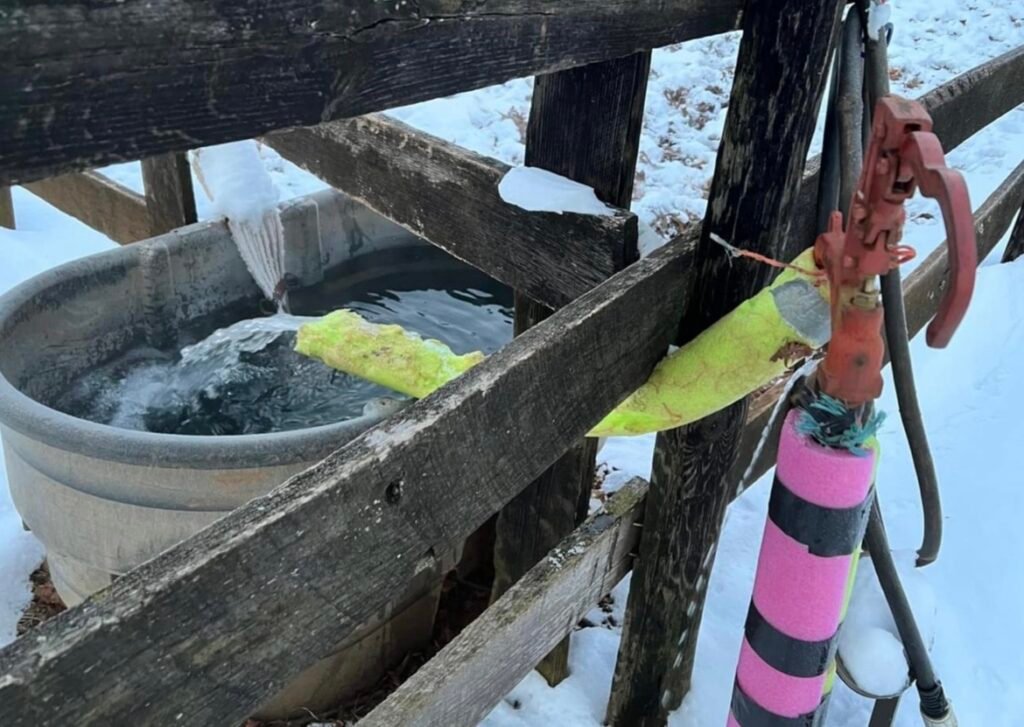
Running water out to different areas of the property is something every farm needs to think about. Hauling water by hand or running hoses across the yard works for a while, but it gets old fast — especially in the summer heat or when you’ve got animals that need consistent access to fresh water. A yard hydrant in the right spot solves a lot of problems at once. For temporary winter watering challenges before a permanent line is installed, Transfer Water In With When Your Hose Is Frozen describes an unconventional way to move water without relying on a frozen hose.
We’ve been dealing with that exact situation here. Getting a permanent water line in the ground and a hydrant installed in the right location makes daily chores a lot easier and sets us up better for everything we’ve got going on — garden, animals, general farm use. If you’re doing any kind of homesteading or small farm operation, reliable water access is one of those things that’s worth doing right.
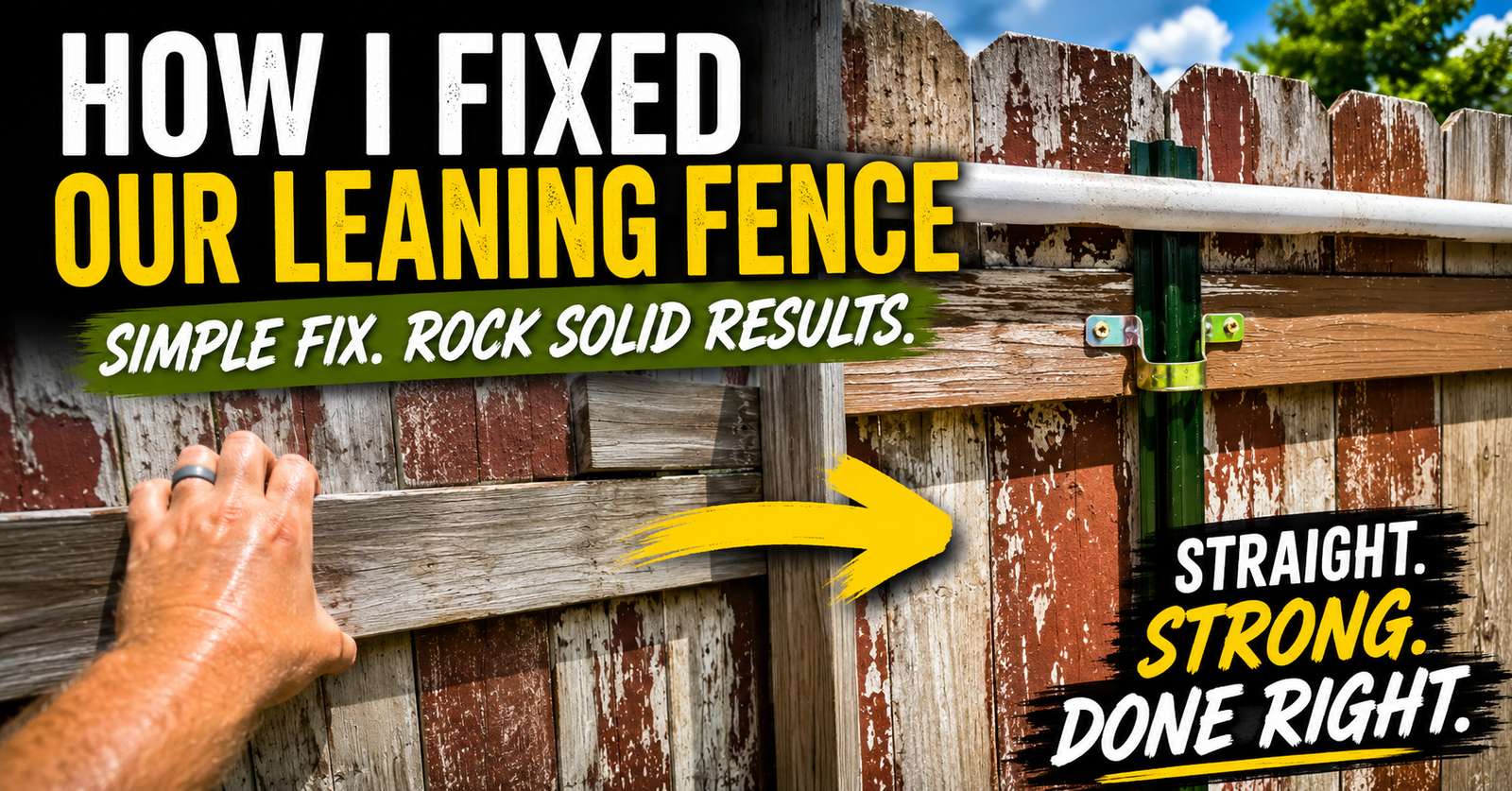
We’ve been working hard on a lot of projects around the farm this year. The water line trench was one of the bigger ones on the list. Another farm project that put a mini excavator to work was How I Fixed Our Leaning Wood Fence Without Replacing the Posts, where it helped straighten an existing fence.

The Machine — AGT QH12R Mini Excavator
We used our AGT QH12R for this job. It’s a 1-ton class mini excavator — small by excavator standards, but that’s intentional for a property like ours. A full-size machine would tear things up getting in and out of tight spots, and for the kind of work we do here a mini excavator hits the sweet spot between capability and manageability.

The AGT QH12R has been a solid machine for us. It’s got enough dig force to get into tough ground, the controls are straightforward once you get some hours on it, and it fits into areas where a bigger machine just wouldn’t work. If you’re in the market for something similar, this 1-ton mini excavator on Amazon is a comparable option worth looking at. For anyone running a small farm or homestead and thinking about whether a mini excavator is worth it — we’d say yes, especially if you’ve got clay soil and drainage or utility work to do regularly.
Digging 50 Feet of Trench Through Clay
The trench needed to be 50 feet long and 3 feet deep. Three feet is the standard depth for a water line here in Missouri to get below the frost line and protect the pipe from freezing in the winter. You don’t want to cut corners on depth for something like this — a frozen line in January is a miserable problem to deal with.

The clay in that area is no joke. It’s the same heavy clay we’ve been battling over in our pumpkin patch project — dense, sticky, and hard on equipment. When clay is dry it’s almost like digging through brick. When it’s wet it turns into something that sticks to everything and wants to pull your bucket down with it.
The AGT worked through it bucket by bucket. It’s not fast work — you’re not going to zip through 50 feet of 3-foot-deep clay trench in an hour with a 1-ton machine. But it was steady and it got done. The machine didn’t bog down or struggle in a way that made us nervous. It just kept working.
The spoil pile along the side of the trench built up fast. Clay is heavy and it piles high. You’ve got to think about where that dirt is going as you dig so you’re not burying yourself in and making the job harder than it needs to be.



What to Know Before You Dig a Water Line Trench
A few things worth knowing if you’re planning a similar project on your own property:
Call 811 before you dig. This is not optional. 811 is the national call-before-you-dig number and they’ll come out and mark any buried utilities on your property for free. We always do this before any trench work. Hitting a buried line is dangerous and expensive, and it’s completely avoidable.
Know your frost line depth. The depth you need to bury a water line depends on where you live. In Missouri, 3 feet is the standard to get below the frost line. In warmer states you might be able to go shallower; in colder northern states you may need to go deeper. Check your local requirements before you plan the job.
Clay makes for heavy spoil piles. If you’re digging in clay, expect the dirt coming out of the trench to be significantly heavier than sandy or loamy soil. Plan your spoil placement before you start so you’re not backed into a corner with nowhere to put it.
Let the machine do the work. With a mini excavator especially, resist the temptation to force things. Work in consistent passes, let the bucket do its job, and you’ll make more progress than if you’re fighting the machine trying to take too big a bite at once.
How the AGT QH12R Handled the Clay
We’ll be honest — we were curious how the machine would hold up through the full 50 feet. One-ton class excavators are capable machines but they’re not heavy iron. Clay puts real stress on a bucket and the arm, and there’s always a question of whether a smaller machine is going to feel underpowered when things get tough.
It didn’t. The AGT QH12R dug the full trench without any issues. There were spots that were harder than others — drier sections near the top of the profile that had really compacted down — but the machine worked through them consistently. By the time we hit the full 3-foot depth across the whole run we felt good about what the machine had done.
For a small farm operation, it’s a genuinely useful piece of equipment. We’ve used it for other projects around the property too, and it continues to earn its keep. If you’re on the fence about whether a mini excavator is worth the investment for small farm work, this kind of job is exactly why we’d say it is.
The Result — Water Line In and Hydrant Ready
Once the trench was dug, getting the pipe in and the hydrant installed was the straightforward part. The hard work was the digging. With the trench done we laid the line, connected everything up, and backfilled. Clay backfills heavy but it also packs back down firm, which is good for long-term stability around the pipe.
Having that yard hydrant in the right spot is already making a difference. Access to water where you actually need it on a farm sounds like a small thing until you’ve spent seasons without it — then it feels like a big deal.
We documented the whole dig on video which you can watch above. If you’ve got questions about the machine or the process, drop them in the comments on the video.
More Farm Projects Coming

This has been a busy season of getting infrastructure right on the property. We’ve also been deep into building out our pumpkin patch — if you want to follow that project from the beginning, start with how we fenced the patch and got our first mulch delivered, then jump to our post on planting our first pumpkin seeds using the compost hill method. We’re documenting all of it as we go.
We’ve got more projects on the way and we’ll keep sharing them here and on YouTube. Thanks for following along with us at Weaver Family Farms.